I run AI at Nuxa, and the most common question I get from restaurant owners evaluating review-reply automation is some version of: "Can it just handle them?" The honest answer is yes — and you almost certainly shouldn't let it. Not for everything. The difference between an AI that replies with approval and one that replies without it is the difference between an employee and a liability.
This post walks through what actually happens in both modes, with the failure cases we've seen across the industry, and how Grace — Nuxa's review employee — splits the difference: routine replies flow fast, anything that touches money, legal exposure, or your public reputation waits at the approval line. Forever.
What goes wrong with fully automatic AI review replies?
When a language model replies to a review with no human in the loop, three failure modes show up in production. Not theoretically — these are the patterns documented across restaurant tech over the past two years.
- Invented facts. The AI apologizes for "the long wait on our truffle pasta" — a dish you've never served — because the model pattern-matched from training data instead of your actual menu. The customer notices. So does everyone reading the thread.
- Unauthorized commitments. "We'd love to make this right — your next meal is on us." The model is trying to be helpful. You just gave away a comped dinner you never approved, and now it's in writing, in public, forever.
- Tone-deaf escalation. A one-star review alleging food poisoning gets a chirpy template reply about "valuing your feedback." A health-claim review is a legal event, not a customer-service event. An unsupervised model can't tell the difference.
The cost of each failure isn't the one bad reply. It's the screenshot. Restaurant reviews are public, permanent, and increasingly read by Google's ranking systems and by AI assistants summarizing your business to potential diners. One hallucinated reply can outlive a hundred good ones.
What goes wrong with fully manual replies?
The opposite failure is quieter but more expensive: nothing gets replied to at all. The median independent restaurant replies to under 30% of its reviews, and the median response time on the ones it does answer is measured in days. Reply rate and reply speed both correlate with local ranking and with whether a frustrated customer escalates or de-escalates. Silence is a strategy too — a bad one.
Owners don't skip review replies because they don't care. They skip them because it's the eleventh thing on a list of ten, every single day.
How does approval-gated AI reply actually work?
Grace reads every new review the moment it lands, drafts a reply in your restaurant's voice, and then does something most AI tools don't: she cites her sources. Every factual claim in the draft — the dish name, the date of the visit, your refund policy, your opening hours — is pinned to where it came from in your actual data. We call this cite-or-die: if Grace can't cite a fact, she can't say it. The draft gets rejected before you ever see it.
Then the draft hits a fork. Routine positive replies — "thank you, see you again soon" with no factual claims and no commitments — can flow on a short leash you configure. Anything else stops at the approval line:
- Anything involving money — refunds, comps, discounts — is approval-gated permanently. There is no autonomy setting, now or ever, that lets the AI move money or promise to. This is a design constant at Nuxa, not a toggle.
- Anything outward-facing with risk — replies to one-star reviews, health or safety allegations, staff complaints — waits for your tap. You see the draft, the citations behind every claim, and an approve/edit/reject choice.
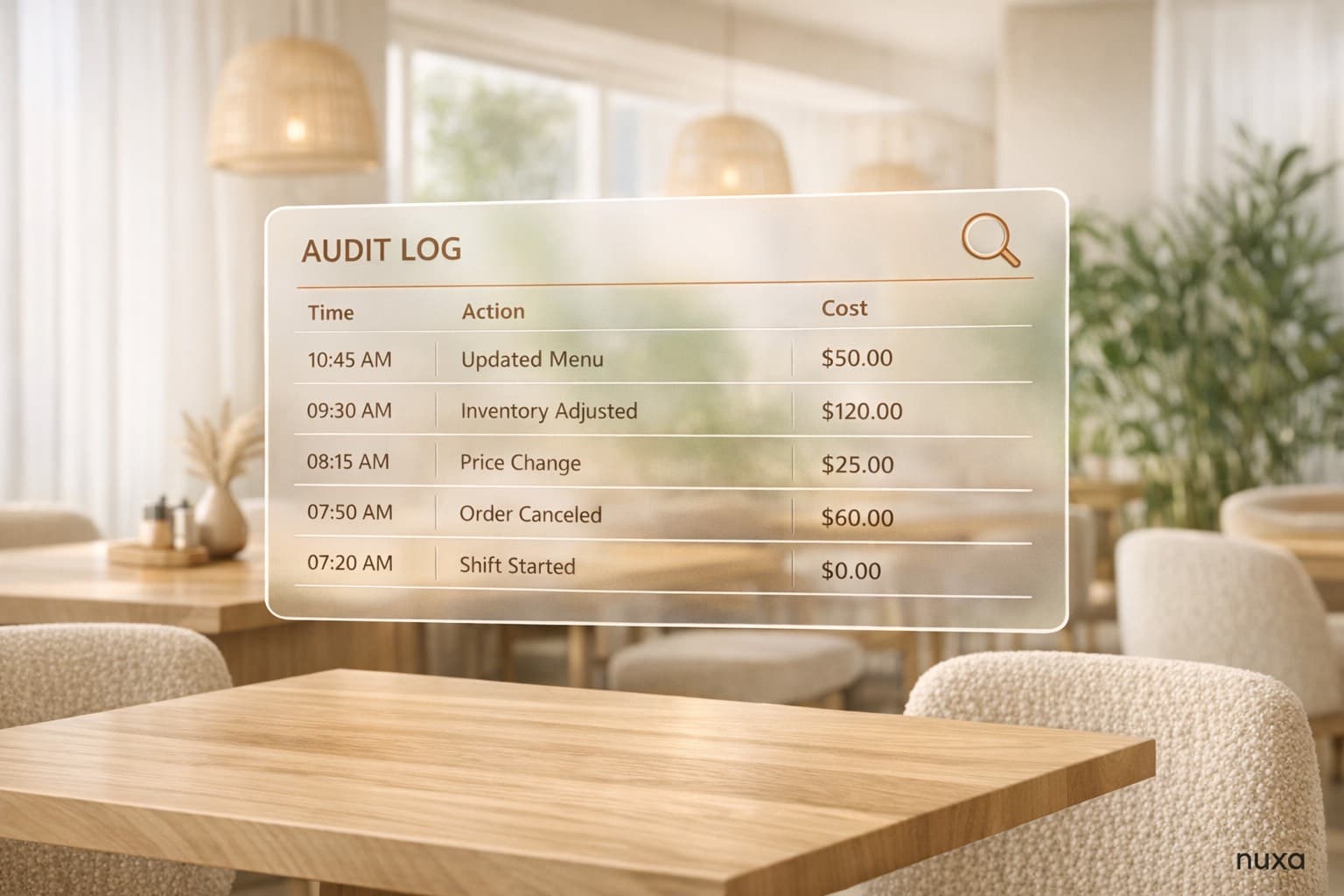
- Everything is logged. Every draft, every approval, every rejection lands in an audit trail you can read. If you ever wonder "why did Grace say that?" — the answer is one click away, with the source cited.
You can read the full safety architecture — citations, the approval line, the audit log — on our trust page (https://nuxa.ai/trust). It's the same machinery behind every Nuxa employee, not just Grace.
Does the approval step kill the speed advantage?
This is the obvious objection, and the answer from real usage is no — because the slow part of replying to reviews was never the posting. It was the composing. Staring at a hostile one-star review and finding the right words takes an owner ten minutes of emotional energy. Approving a well-drafted, fully-cited reply takes fifteen seconds from a phone. Owners using approval-gated replies typically answer reviews within hours instead of days, and their reply rate goes from "sometimes" to "effectively all of them."
The approve/reject decisions also aren't wasted motion. Every rejection teaches Grace what your voice isn't — we wrote about that feedback loop in detail in the decision journal post (https://nuxa.ai/blog/decision-journal-train-your-ai).
So which mode should you run?
If a vendor offers you fully automatic review replies with no approval line and no citations, ask them two questions: what stops the model from inventing a fact, and what stops it from promising a refund? If the answer is "the prompt tells it not to," walk away. Prompts are suggestions. Gates are guarantees.
The mode that wins is the hybrid: AI does the reading, drafting, and citing; you do the judgment on anything that matters. That's how Grace works inside Nuxa's review management (https://nuxa.ai/review-management), and approved replies — along with everything else your AI team did overnight — show up in your Daily Brief (https://nuxa.ai/daily-brief) each morning. Plans start at $99/month, and the approval line is included at every tier because it isn't a feature. It's the foundation.