I operated restaurants for fifteen years, and the losses that hurt most were never the ones that announced themselves. A bad review stings, but at least you know. The losses that actually move your revenue are silent: the Tuesday couple who came every week for two years and then simply… didn't. No complaint. No goodbye. You notice four months later, if you notice at all, and by then they have a new Tuesday place.
Here's the uncomfortable part: your data knew. The order history had a clean, regular rhythm, and then the rhythm stopped. Churn alerts are the discipline of watching for that stop while the relationship is still recoverable. This post covers how they work, why the window matters so much, and how to win someone back without being creepy about it.
How big is silent churn for restaurants, really?
The industry numbers are consistent and brutal: for every guest who complains, many more leave without saying anything, and a lapsed regular is worth a multiple of a new customer — they spend more per visit, visit more often, and bring people. Losing one weekly regular at a €40 average check is over €2,000 a year of revenue, gone without a single signal you'd notice in a busy week. A restaurant that loses two regulars a month is quietly bleeding the equivalent of a part-time salary.
You watch your review score like a hawk and your regulars like a stranger. The review score is the lagging indicator. The regulars are the business.
What is a churn alert and how does it actually detect a lost regular?
A churn alert is a simple idea executed on data most restaurants have but never query: each guest's visit cadence, learned from real order and reservation history, compared against their own baseline. Not "hasn't visited in 30 days" — that flags your monthly visitors as churned and misses your twice-a-week people for ages. Against their own rhythm:
- A guest who came every 9 days on average and is now at 28 days is overdue by 3× their cycle — that's a flag, even though 28 days would be perfectly normal for someone else.
- A guest whose visits were already stretching — 9 days, then 14, then 23 — was decaying before they disappeared. The trend is visible earlier than the absence.
- Order composition matters too: the regular who dropped from dinner-for-two to a single takeaway order before going quiet was telling you something.
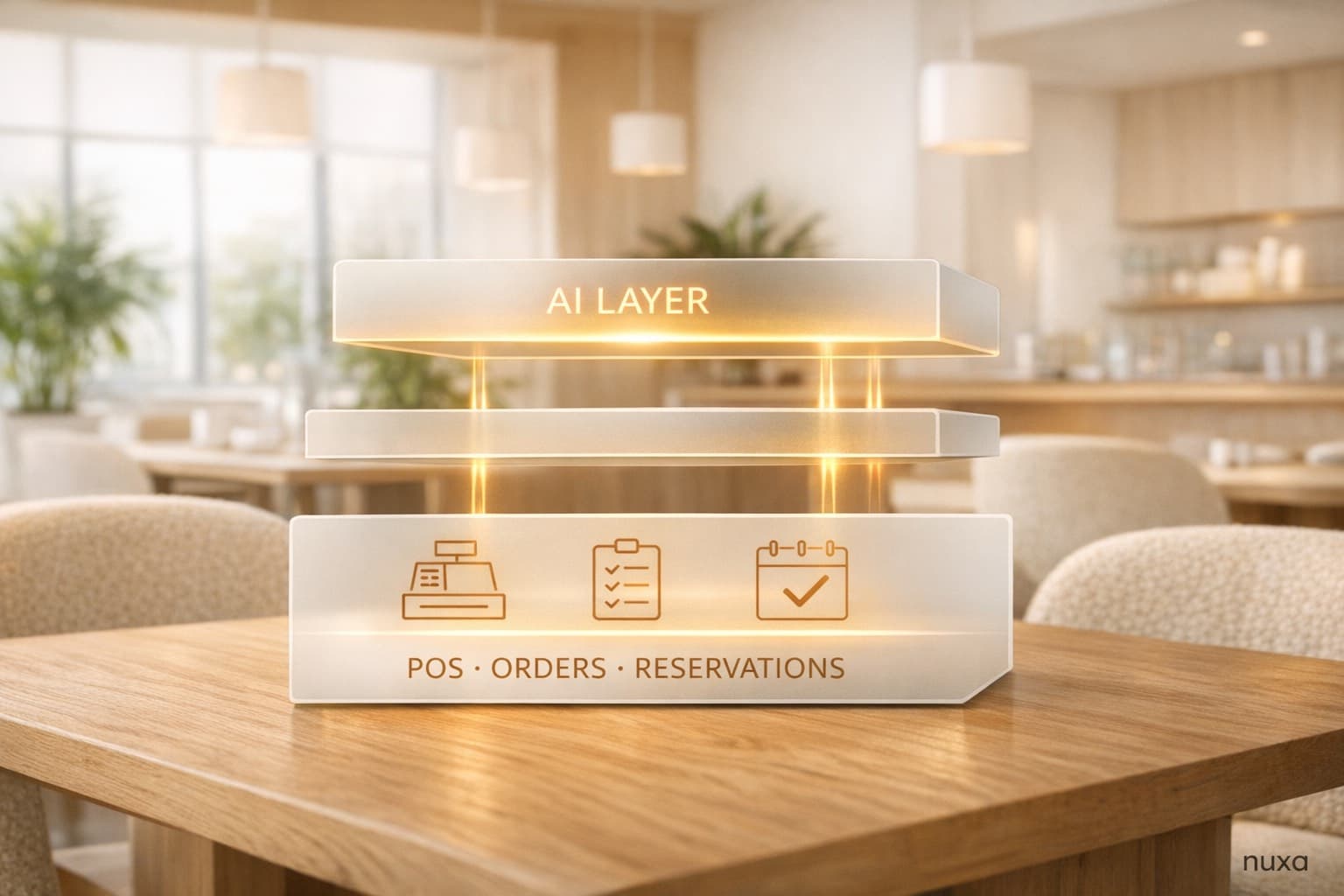
This is exactly the kind of detection that only works when the AI reads the system of record directly. Nuxa connects to your POS and ordering system and reads it at the source — so visit history is live and complete, not a stale export. We wrote about why that architecture choice matters in why we built on a POS (https://nuxa.ai/blog/why-we-built-on-a-pos).
Why is 60 days the line between recoverable and gone?
Habit research and restaurant CRM data point the same direction: a lapsed regular is most recoverable while the habit slot is still open — before someone else's restaurant fills their Tuesday. In the first few weeks of absence, a win-back message reads as "we noticed, we care." Past a few months, it reads as marketing, and the response rate collapses. Sixty days is roughly where "we miss you" stops being true in the guest's mind, because by then they don't miss you back.
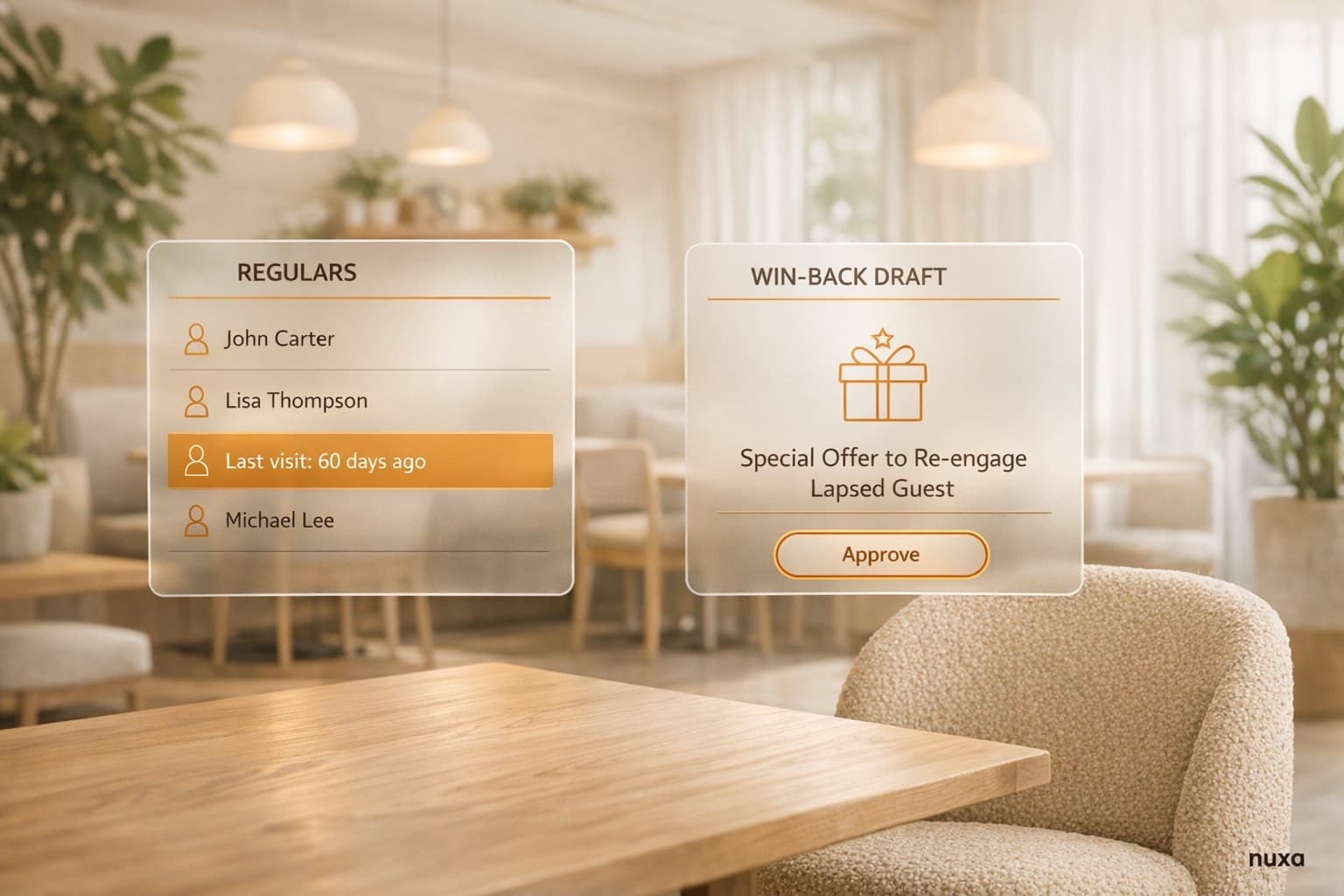
Which is why the alert has to be automatic. No owner is going to manually audit visit cadences weekly. In Nuxa, churn flags surface in your Daily Brief (https://nuxa.ai/daily-brief) — Dash includes them alongside revenue and reviews: "3 regulars went quiet this month; here's who, here's their usual order, here's a suggested note." And critically, every flag is cited: you can see exactly which visits the pattern was computed from, because a claim about a customer with no evidence behind it is exactly the kind of AI guesswork the cite-or-die rule exists to prevent (https://nuxa.ai/trust).
What does a good win-back look like — and what crosses the line?
- Good: a short, personal, low-pressure note. "We haven't seen you in a while — your corner table misses you." Light, human, optionally with a modest gesture.
- Bad: "Our records indicate your last visit was April 3rd at 19:42 where you ordered the lamb shank." Accurate and horrifying. The data informs the message; it never appears in the message.
- Bad: leading with a deep discount. It reprices the relationship and trains the lapse. A gesture should feel like hospitality, not a coupon engine.
And one rule we've made structural rather than cultural: outreach that goes out under your restaurant's name is an outward-facing action, which means it stops at the approval line. The AI drafts the win-back; you approve it — or don't — from your phone. Anything involving money, like a comp, is approval-gated permanently. Your regulars are the most valuable relationship your restaurant has. The AI's job is to make sure you never lose one without noticing. The decision to reach out stays yours.